
Bridgeport County Arrest Records and Charges
Bridgeport County arrest records are not the same thing as the final criminal case file. The arrest side can include a police incident number, arrest date, arrest time, arresting officer, name, address, race, sex, age, court date, and a statute or charge description. Research for Bridgeport identifies the Bridgeport Police adult arrest log as an arrest-record source with those fields. It is a police record, not proof that the person was convicted.
The court charge record begins after the arrest when prosecutors review the police facts and pursue formal charges in Superior Court. Connecticut uses State's Attorneys rather than county district attorneys, and the Bridgeport Judicial District State's Attorney is the prosecutor office identified in the research. The formal court charge is tracked through a docket number, arraignment court, bond, court dates, charge status, and disposition. Custody details belong with the Bridgeport inmate records path, while the full case file and sentence belong with the criminal court record.
This split is especially important in Bridgeport because records are not held by one county office. Police records remain with the City of Bridgeport Police Department, court charges route through Connecticut Superior Court records, and custody information belongs to the Connecticut Department of Correction. A single arrest may therefore require three checks before the record picture is clear. The arrest log may show the incident and initial statute. The court docket may show a different filed count. The DOC search may show only whether the person is currently held.
The official Bridgeport Police Department page is one source for police records context. The screenshot below shows the city police source tied to Bridgeport arrest records and charge research.
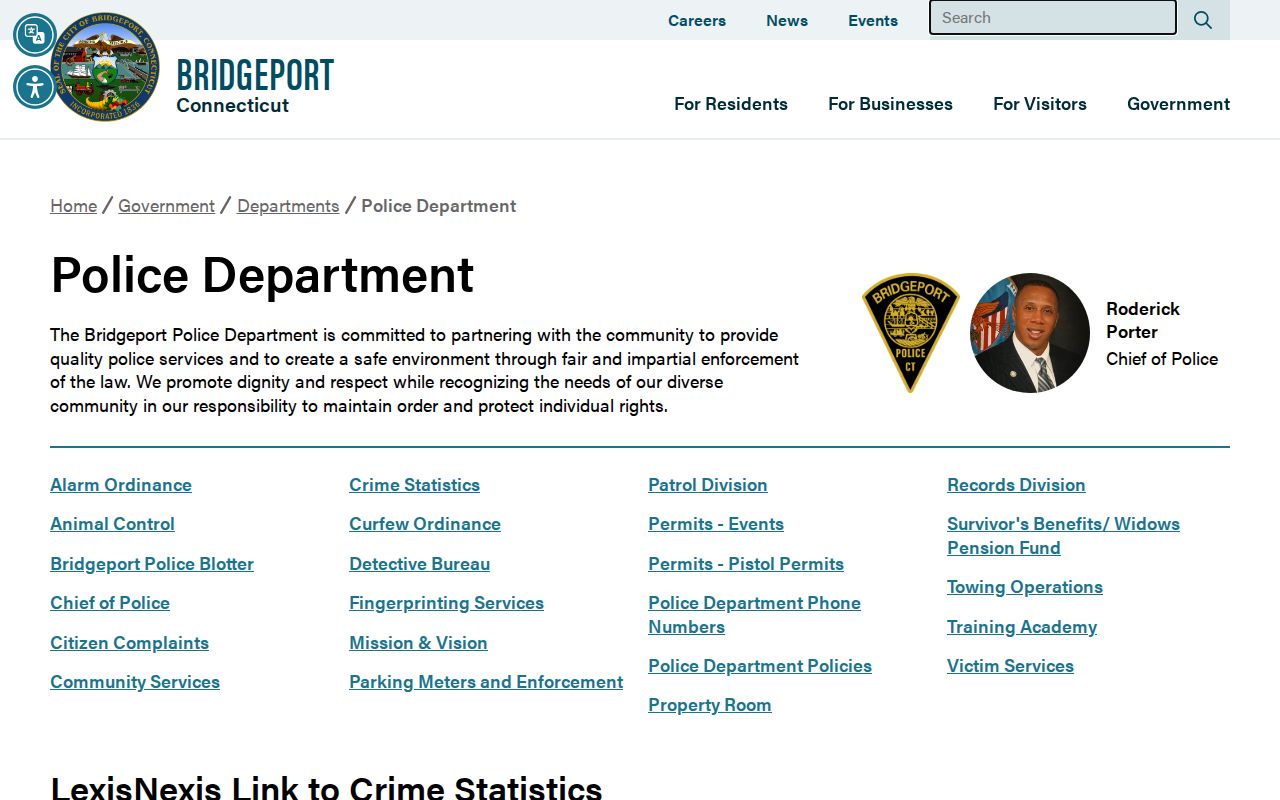
Police records explain the arrest side, but the court charge must be checked through the Judicial Branch or the proper clerk when a case has opened.
Find Bridgeport County Arrest Records
Bridgeport arrest and charge searches work best as a chain. Start with the record holder most likely to have the specific document. Police reports, accident reports, adult arrest logs, arrest warrants, and local incident records are maintained through the Bridgeport Police Records Division. Court charges and court dates are searched through Connecticut Judicial Branch criminal and motor vehicle tools. Older files, certified copies, sealed matters, and missing online records require the courthouse clerk.
- Check Bridgeport Police Records Division for police-held arrest records, adult arrest logs, accident reports, and incident-report access rules.
- Use the Connecticut Judicial Branch criminal and motor vehicle defendant search to locate pending charges by name when a court case exists.
- Use the conviction search if the question is whether a charge ended in a conviction rather than a pending or dismissed matter.
- Call the G.A. 2 Chief Clerk's Office for criminal and motor vehicle arraignment or case-status questions that do not appear online.
- Use the city FOI portal when the Bridgeport Police Records Division directs the request through public-records workflow.
Incident reports have an important local limit. Bridgeport Police says an incident report where an arrest was made is not available from the Police Department until all charges are adjudicated in court. Victims may use the victim's advocate at court, and arrested persons may use counsel or a Public Defender depending on representation.
The court path also depends on case type. Criminal and motor vehicle charges that require appearance can appear through Judicial Branch criminal and motor vehicle searches, while civil, family, housing, and small claims records use other Superior Court portals. If a police arrest led to a motor vehicle charge at G.A. 2, search the criminal and motor vehicle tools rather than the civil inquiry portal. For certified copies, older records, or records with limited online details, contact the clerk attached to the courthouse handling the case.
Bridgeport County Charging Documents
A charge record is narrower than a full criminal case. It focuses on the accusation filed after arrest: statute number, charge description, count, case number, court date, bond, and current status. In Bridgeport, lower-level criminal arraignments, misdemeanors, felony first appearances, and motor vehicle cases requiring appearance route through Geographical Area 2 at Bridgeport. More serious criminal matters are associated with the Fairfield Judicial District Superior Court in Bridgeport.
| Document Type | Who Uses It | What It Usually Starts | Bridgeport Charge Use |
|---|---|---|---|
| Complaint | Police or prosecutor | Initial criminal accusation | May reflect the arrest facts and initial charge path into G.A. 2 or Superior Court. |
| Information | State's Attorney | Formal prosecution in court | Shows the charge the prosecutor pursues after review, which may differ from the arrest entry. |
| Indictment | Grand jury or comparable formal charging process where applicable | Serious criminal prosecution | Less common for ordinary local lookups, but still a charging document rather than a conviction. |
Connecticut charge records can change. A police arrest log may list the statute and charge at arrest, while the court docket may show that the prosecutor amended, reduced, nolled, or dismissed a count. The court record is the better source for current charge status.
The City of Bridgeport links a public-records request portal for city records. That portal is the source shown below for Bridgeport arrest records requests that need FOI handling.
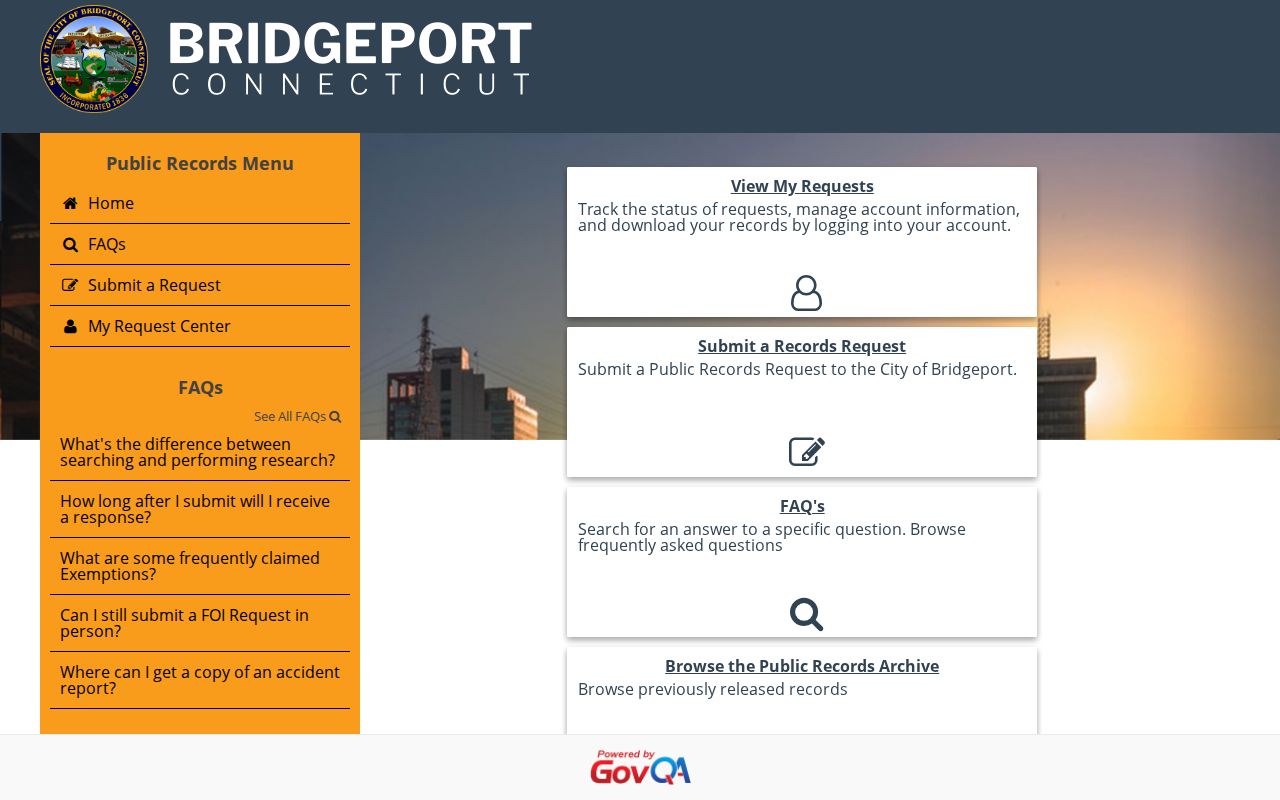
The FOI path helps with city-held police records, while Judicial Branch portals and clerks handle court charge records and certified court copies.
Bridgeport County Charge Status
Charge status is the key reason to separate an arrest record from a court record. A person can be arrested and never convicted. A count can be added after arraignment, reduced during plea talks, dismissed by the court, or nolled by the prosecutor. Connecticut research defines a nolle as the prosecutor's decision not to proceed at that time, and a disposition as the outcome of a charge or case.
| Status | Meaning in a Bridgeport Charge Record | Where to Check |
|---|---|---|
| Pending | The charge is still open and has not reached final disposition. | Judicial Branch pending criminal or motor vehicle case tools. |
| Amended or Reduced | The prosecutor or court record shows a changed charge, count, or severity. | Court docket entries and clerk records. |
| Dismissed | The court terminated the charge or case without a conviction on that count. | Disposition field or certified clerk copy. |
| Nolle | The State's Attorney chose not to proceed at that time under Connecticut practice. | Disposition field and, if needed, clerk confirmation. |
| Erased or Restricted | A qualifying outcome may be removed from public access under Connecticut erasure law. | Originating court, agency, or statute-based erasure review. |
Note: A missing public result may mean the case is older, restricted, erased, under a different name spelling, or held by another office.
Bridgeport Charges vs Convictions
Charges and convictions are often mixed together in casual searches, but they mean different things. A charge is the accusation filed after arrest. A conviction is a final guilty finding or guilty plea on a charge. The Connecticut Judicial Branch provides separate criminal and motor vehicle tools for pending case searches and conviction searches, so the search path depends on the question being asked.
| Point of Comparison | Charge | Conviction |
|---|---|---|
| Stage | Filed after arrest or court review. | Entered after plea, verdict, or other qualifying outcome. |
| What it proves | An accusation was filed in court. | The person was found guilty or pleaded guilty. |
| Bridgeport search route | Pending criminal and motor vehicle case search, police records, clerk. | Criminal and motor vehicle conviction search by defendant. |
| Can change | Yes. Charges may be amended, reduced, dismissed, or nolled. | May later be affected by erasure, pardon, appeal, or correction. |
For full criminal case records, including pleas, motions, disposition, and sentence, use the Bridgeport criminal court records path rather than relying only on the arrest log.
Bridgeport Police Record Channels
The Bridgeport Police Records Division is the city source for many police-side records. The research inventory ties that office to reports, accident reports, incident reports, warrants, arrest records, fees, LexisNexis crash reports, and the city FOI portal. The office is different from the Superior Court clerk, the DOC inmate search, and the State's Attorney.
Bridgeport also documents an official vendor route for crash records. The manifest identifies LexisNexis BuyCrash as the vendor portal linked by Bridgeport for accident reports. That vendor source is relevant only because Bridgeport's police records research documents it. It is not a court charge database and should not be used as a substitute for criminal or motor vehicle court lookup.
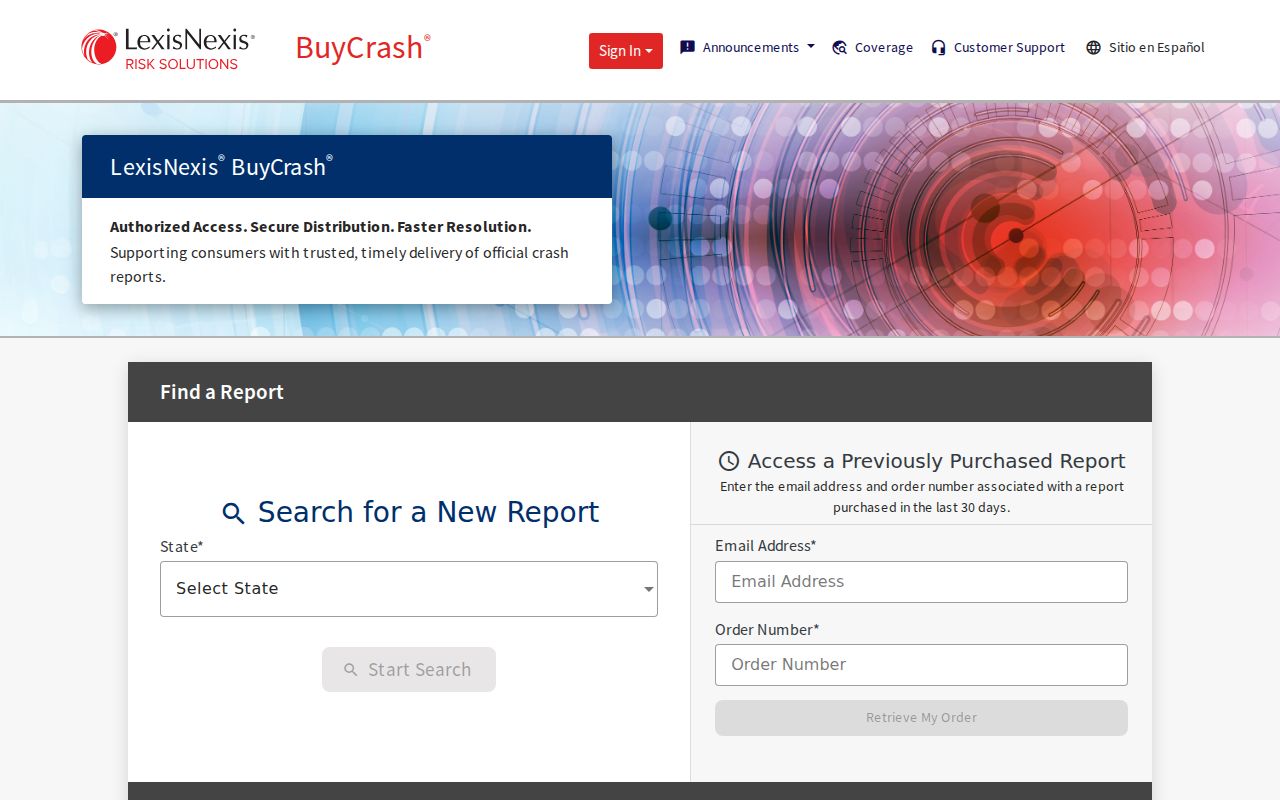
Crash reports can help identify a police event, but charges, court dates, and dispositions must be confirmed through court or police records channels.
Restricted Bridgeport Charge Records
Connecticut public access is broad, but not every Bridgeport arrest or charge record is public. The Connecticut Freedom of Information Act, Chapter 14, gives a general public-records right unless an exemption applies. Court access also depends on Judicial Branch rules, sealing orders, and case-specific limits. Juvenile records are generally confidential under Conn. Gen. Stat. section 46b-124.
Erasure is another limit. Conn. Gen. Stat. section 54-142a governs erasure of certain criminal records after dismissals, acquittals, nolles after statutory periods, pardons, and other qualifying outcomes. Bridgeport Police also notes that juvenile reports require Youth Bureau commander approval, and sexual-assault reports require Detective Bureau commander approval.
Pending police reports can have a different access rule from final court records. Bridgeport Police records may be delayed while charges are still active, but Judicial Branch docket metadata can still show the court case if public access is allowed. A sealed order, juvenile confidentiality rule, erased disposition, or case-specific redaction can limit either source. When the public portal and police response do not match, use the docket number, incident number, charge statute, and court date to ask the correct office for the record it actually holds.
Note: Do not treat an arrest entry as a conviction, and do not treat a public-search miss as proof that no record exists.